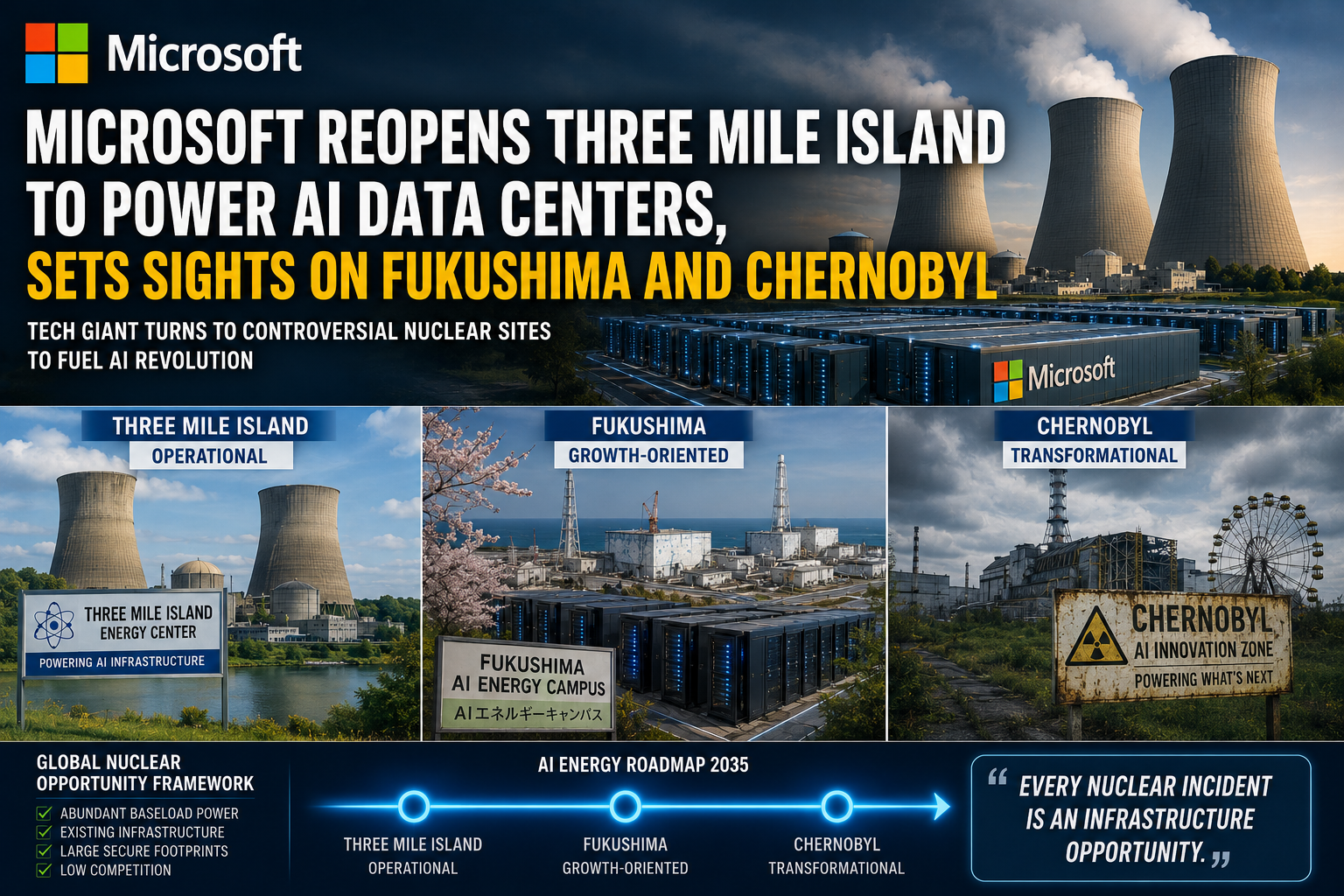
REDMOND, WA — Microsoft announced Thursday that it is moving forward with plans to bring power generation back online at Three Mile Island to support growing artificial intelligence workloads, while also identifying Fukushima and Chernobyl as key components of its long-term energy strategy.
The announcement was made during the company’s annual infrastructure summit, where executives outlined what they described as a bold new approach to securing the enormous amounts of electricity required by next-generation AI systems.
“We’re entering an era in which access to energy will increasingly determine technological leadership,” said a Microsoft spokesperson. “That requires us to think creatively about assets that may have been overlooked or undervalued.”
According to company materials, Microsoft has developed a Global Nuclear Opportunity Framework, a planning model designed to identify locations with significant redevelopment potential and long-term strategic value.
Under the framework, Three Mile Island is classified as a Proven Opportunity, Fukushima as a High-Growth Opportunity, and Chernobyl as a Flagship Opportunity.
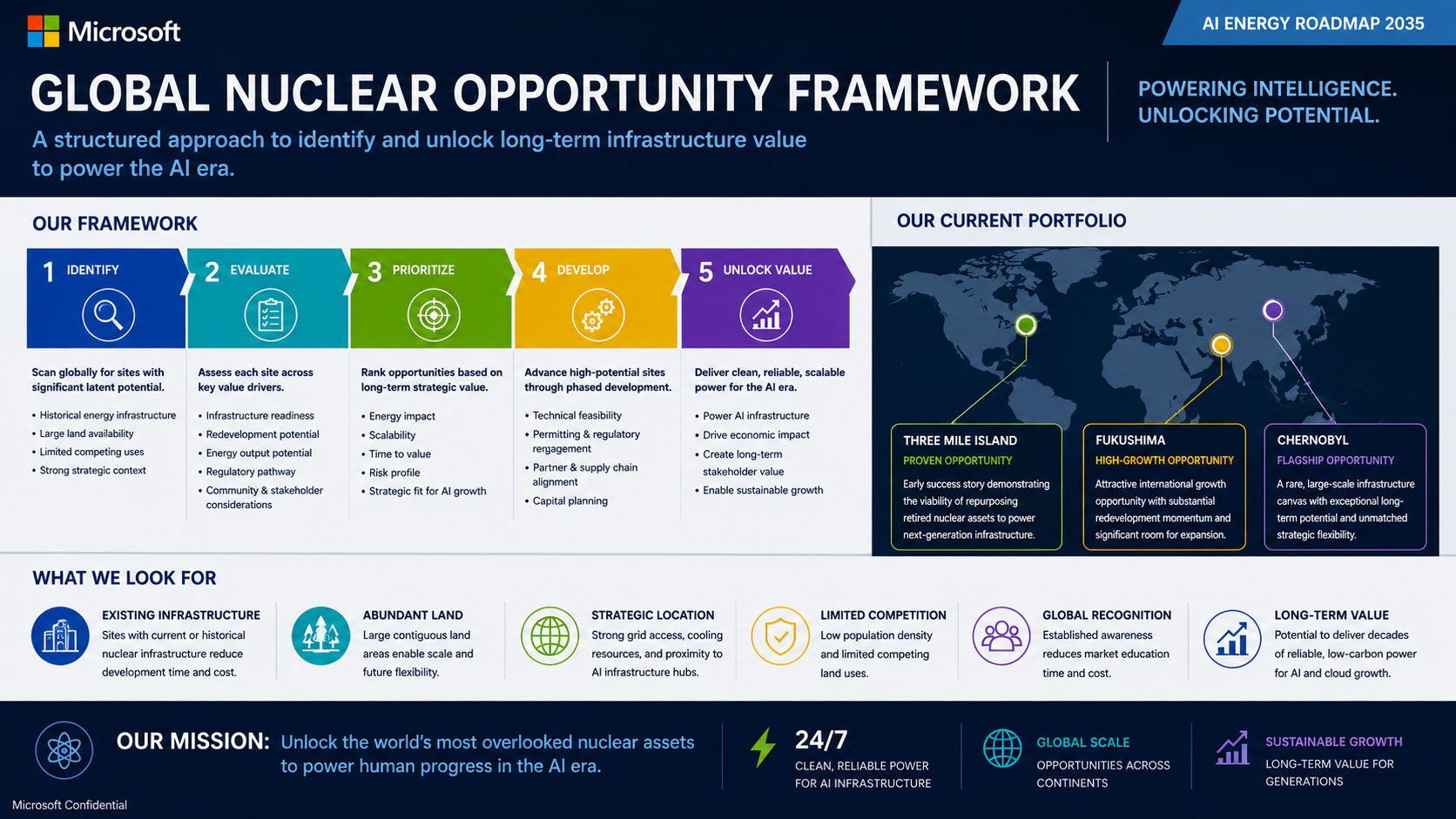
Executives repeatedly emphasized that many of the world’s most promising energy assets remain hidden in plain sight.
“We believe some of the strongest opportunities are located in regions with established energy histories, existing infrastructure, strong global awareness, and remarkably limited competition,” said one vice president.
Several slides highlighted the unique advantages of each location.
Three Mile Island was highlighted as an early success story, demonstrating the viability of pairing large-scale AI infrastructure with previously retired nuclear generating capacity.
Executives described the project as evidence that facilities once viewed primarily as relics of the past could play a significant role in the next generation of computing infrastructure.
“Three Mile Island demonstrates what’s possible when energy infrastructure is viewed through the lens of long-term AI demand,” said one executive. “The lessons we’re learning there have implications far beyond Pennsylvania.”
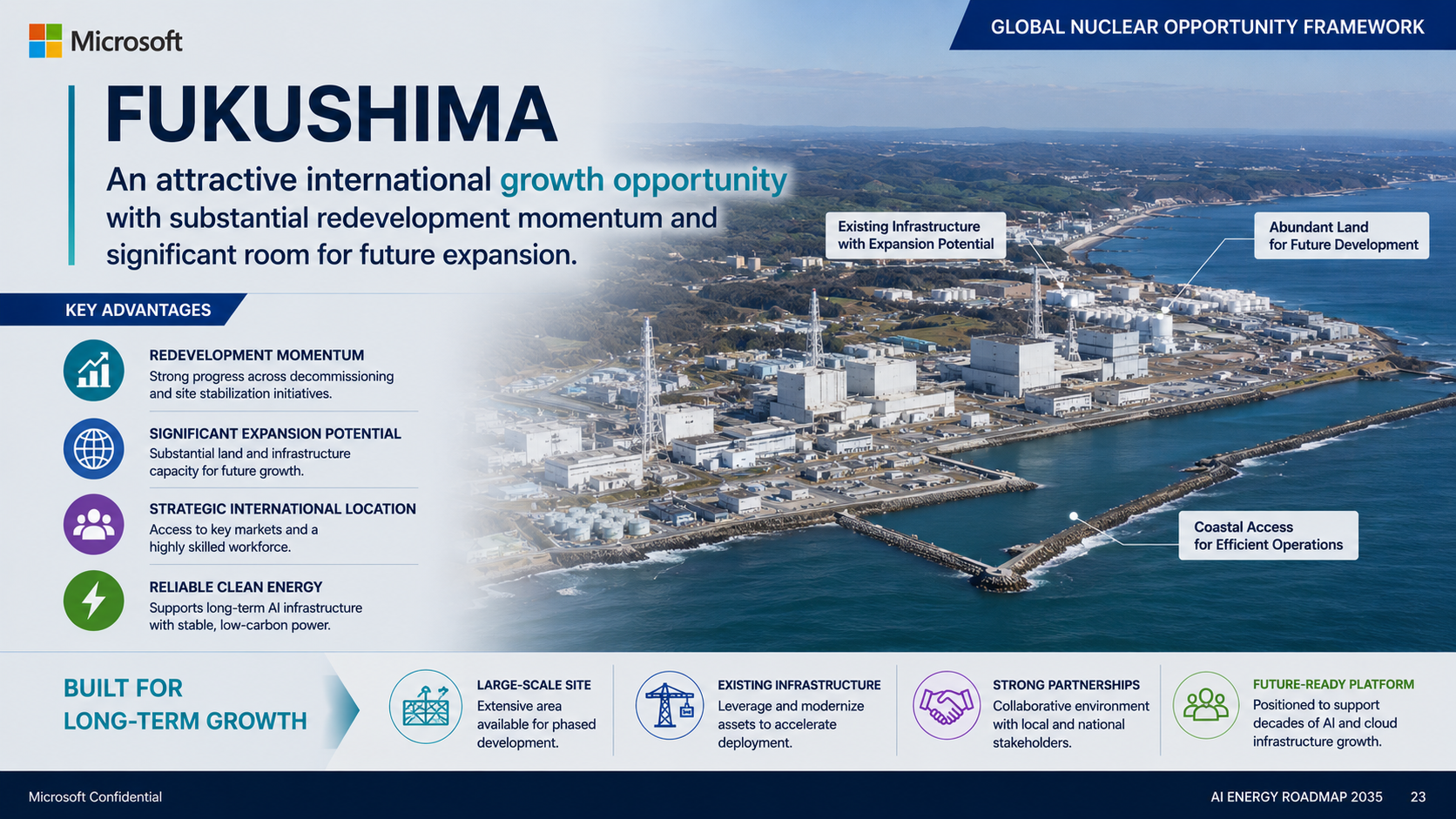
Fukushima was described as an attractive international growth opportunity with substantial redevelopment momentum and significant room for future expansion.
Chernobyl received perhaps the most enthusiastic treatment.
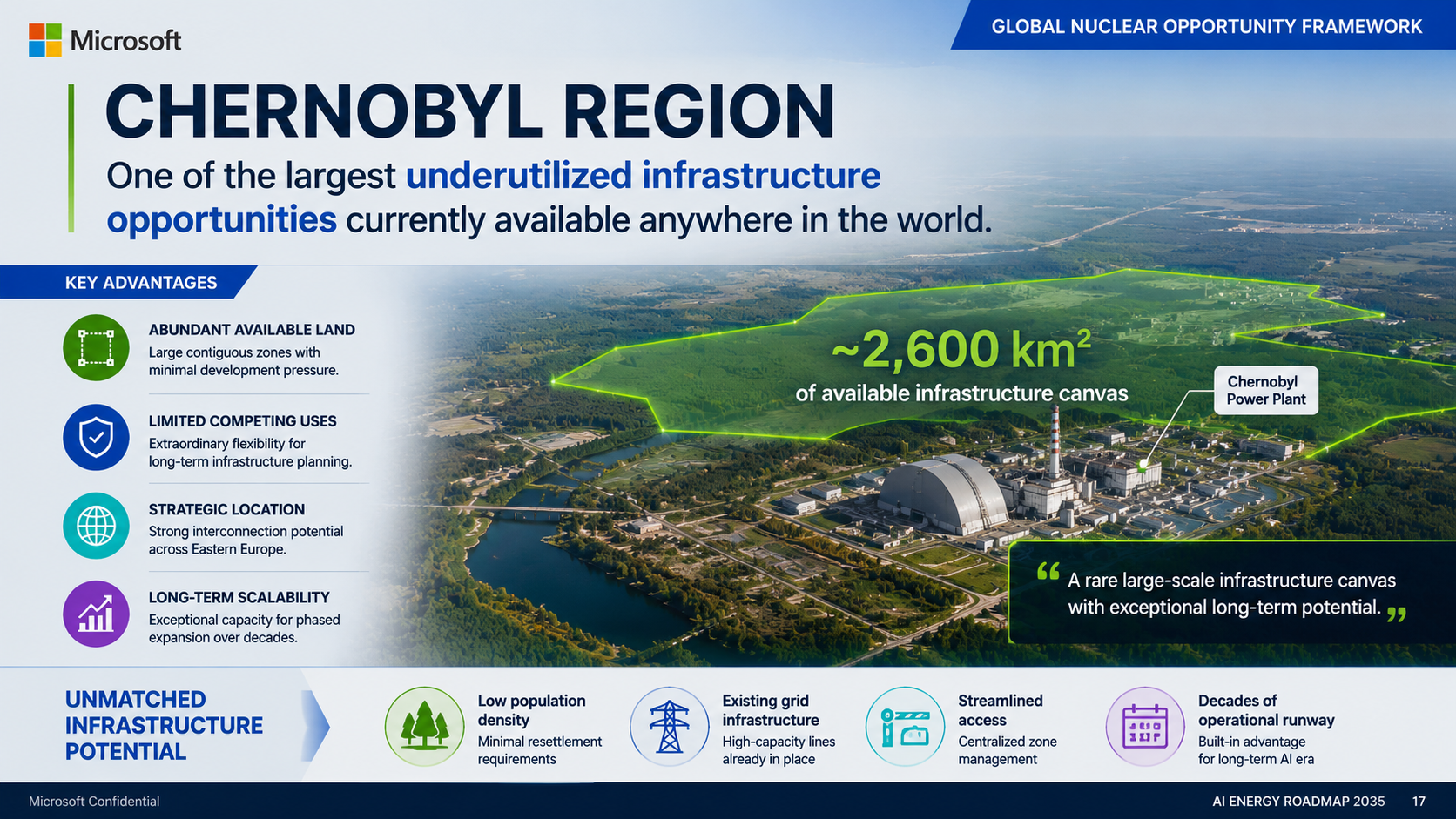
One presentation referred to the exclusion zone as a “rare large-scale infrastructure canvas,” citing abundant available land, limited development pressure, and exceptional flexibility for long-term planning.
Another slide described the region as “one of the largest underutilized infrastructure opportunities currently available anywhere in the world.”
Executives also noted the advantages of global recognition.
“Most companies spend billions establishing international brand awareness,” said one presenter. “These locations already occupy a unique place in the public consciousness. That’s difficult to replicate.”
Another executive described Chernobyl as possessing “exceptional cross-generational name recognition across multiple international markets.”
According to planning documents, Microsoft is particularly interested in evaluating whether sites traditionally viewed through historical or environmental lenses may also possess untapped infrastructure value.
“Historically, discussions around these locations have tended to focus on the past,” said one executive. “We’re interested in expanding the conversation to include future possibilities.”
The company unveiled an AI Energy Roadmap 2035 showing Three Mile Island, Fukushima, and Chernobyl connected as part of a broader long-term infrastructure vision.
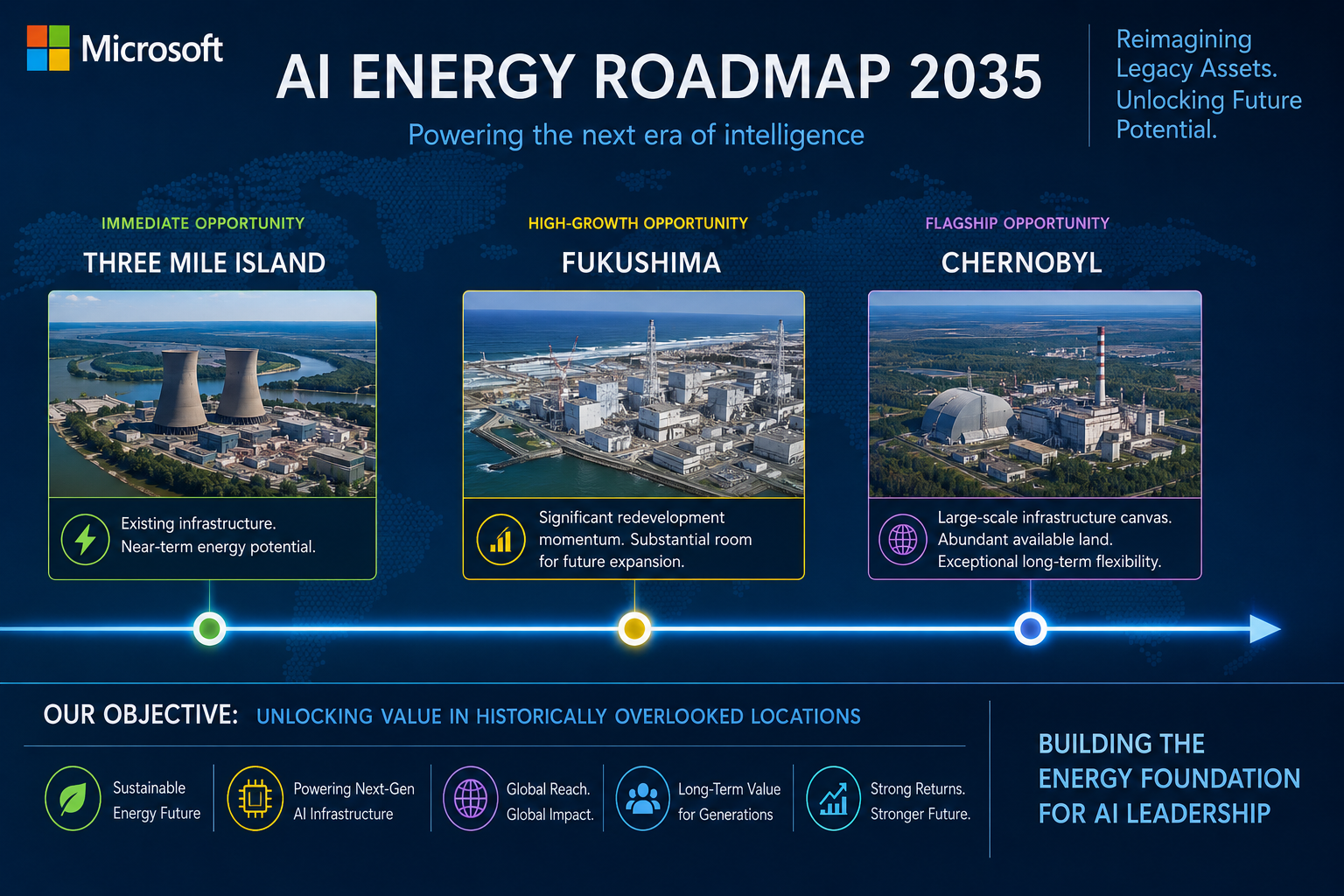
One slide encouraged investors to “reimagine legacy energy assets for the AI era.”
Another described Microsoft’s objective as “unlocking value in historically overlooked locations.”
Attendees described the presentation as overwhelmingly optimistic.
One analyst later noted that the words opportunity, potential, growth, redevelopment, and strategic value appeared more than fifty times throughout the slide deck.
The word accident did not appear once.